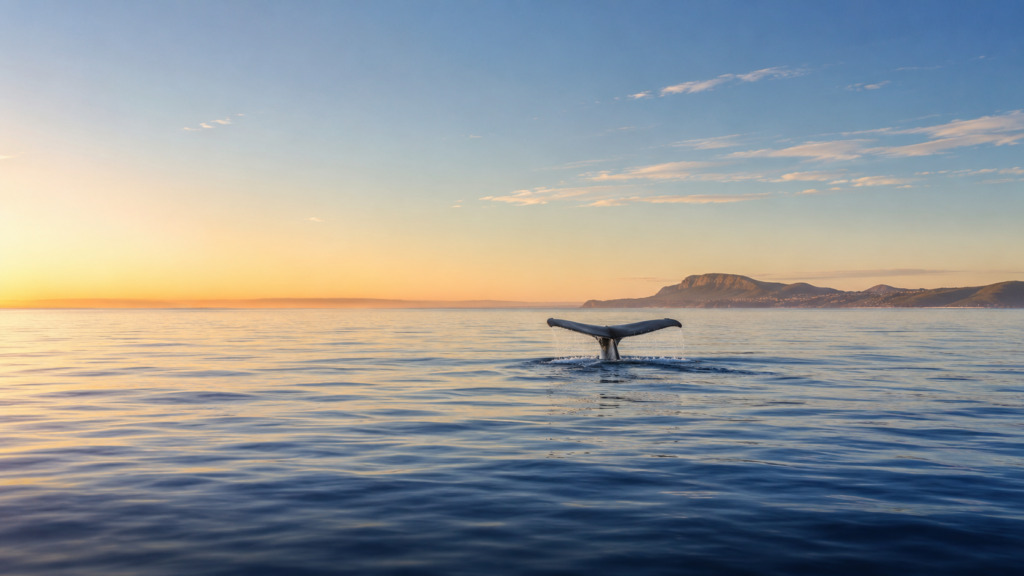
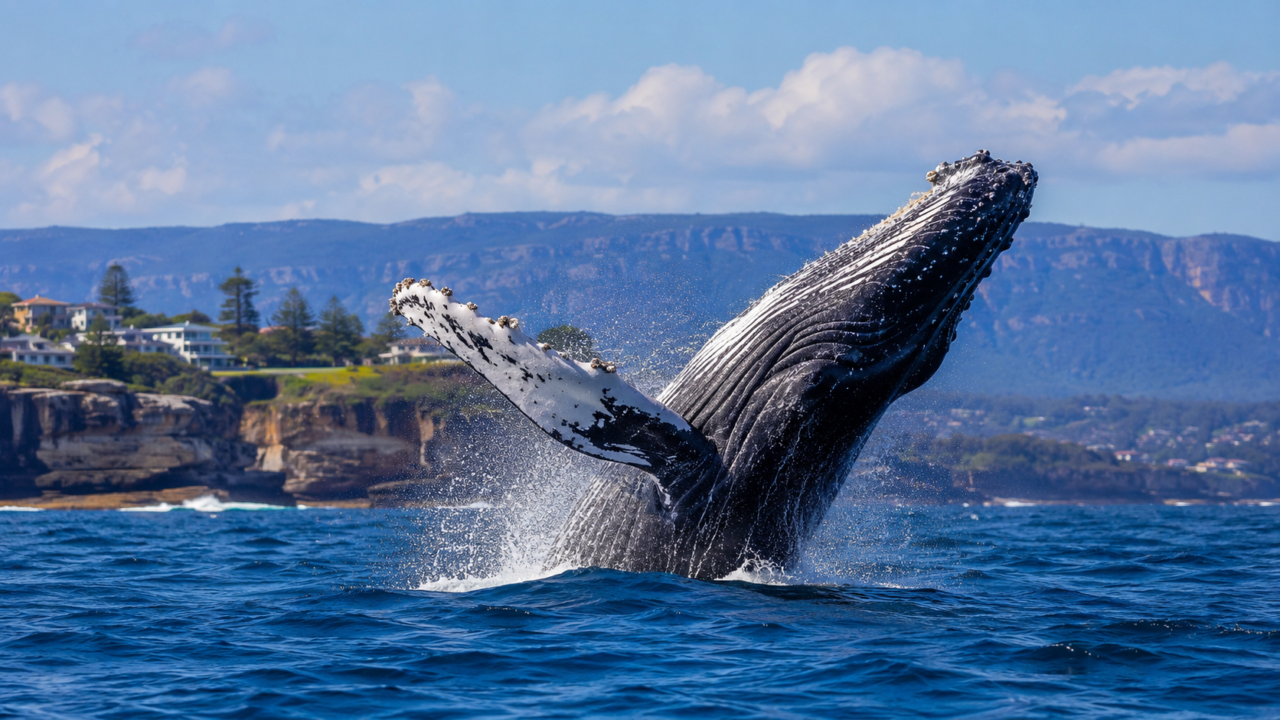
One of the most magical things about travelling around Australia is realising how close we are to some of the world’s most incredible wildlife. And during whale watching season, the coastline feels extra special.
Every year, thousands of whales travel along Australia’s coast as part of their annual migration. Some are heading north toward warmer waters, while others are returning south with their calves. If you are lucky, you might see a tail slap, a blow, a breach, or even a mother and calf moving slowly through the water.
The best part is that you do not always need to be on a boat to enjoy it. Some of our favourite whale watching moments can happen from a coastal lookout, a walking track, or even a quiet headland where everyone suddenly stops talking because a whale has appeared in the distance.
When is whale watching season in Australia?
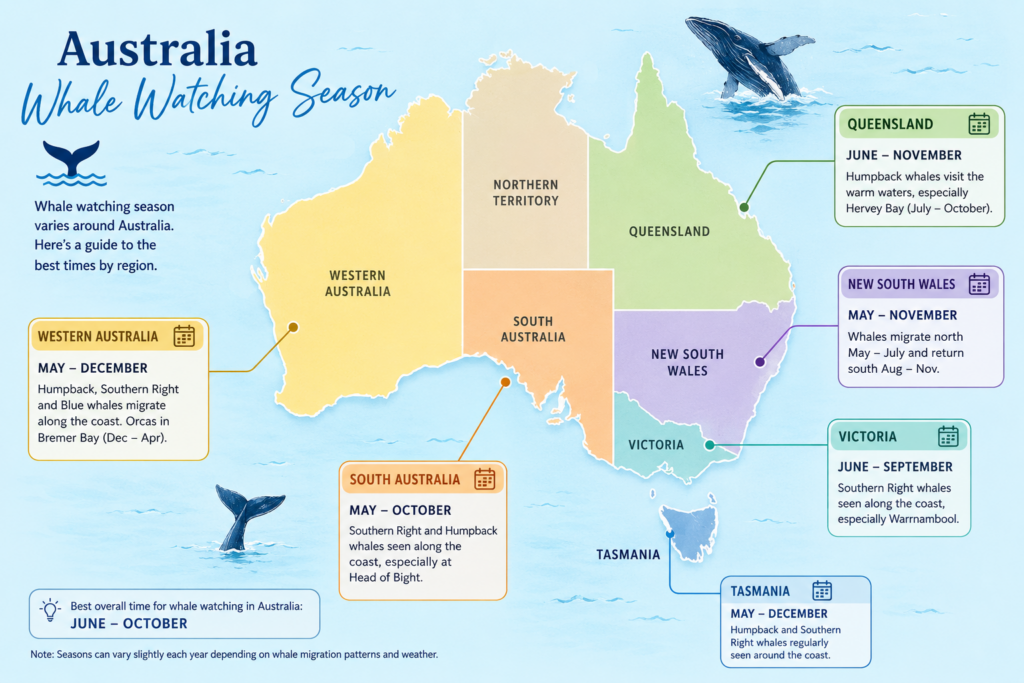
The main whale watching season in Australia usually runs from May to November, especially for humpback whales along the east coast and west coast. In New South Wales, whales are seen during their annual migration from May to November, with many viewing spots available from headlands, beaches, parks and walking tracks.
On the NSW coast, whales generally move north around May and June, then return south from around August to November. The peak northbound period is usually around late June and July, when large numbers can be seen from the coastline.
For us, the safest overall window to plan a whale watching trip in Australia would be June to October. This gives you a strong chance across many regions, though the exact timing depends on where you are going.
Why do whales migrate along Australia?
Whales migrate between colder feeding grounds and warmer breeding or calving areas. Along the Australian coastline, humpback whales are one of the most commonly seen species during this journey. On the east coast, they travel north toward warmer waters and later return south, often with calves.
That is what makes whale watching feel different depending on the month. Earlier in the season, you may see whales moving steadily north. Later in the season, the pace can feel slower, and there is a better chance of seeing mothers with calves.
Whale watching in Sydney and NSW
If you are based in Sydney, you do not need to travel far to experience whale watching. From around May to November, whales pass along the NSW coast and many national parks and coastal reserves offer good viewing opportunities.
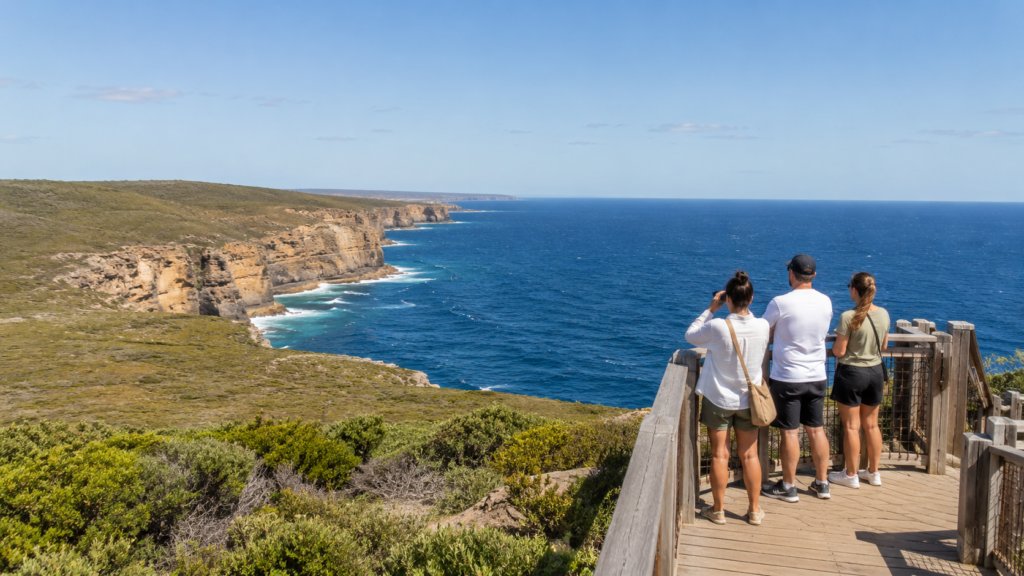
The northbound migration is usually stronger around June and July, while the southbound migration with calves is usually from around September to November. NSW National Parks also notes that humpback and southern right whales head north through June and July, then return south from around September to November.
Some great NSW style shots for a blog or video would be whales seen from a lookout, people with binoculars facing the ocean, and a wide coastal landscape that shows how whale watching can be a simple day trip.
Whale watching in Hervey Bay, Queensland
Hervey Bay is one of the most famous whale watching destinations in Australia, and for good reason. The calm, protected waters around K’gari make it a special place for humpback whales, especially because they pause there during their migration rather than simply passing through. Queensland’s official tourism site says migrating humpbacks visit Hervey Bay between June and November.
This is the kind of place where you would plan a proper whale watching trip, not just a quick lookout stop. The experience can feel more immersive because many tours are designed around spending time on the water and watching whale behaviour.
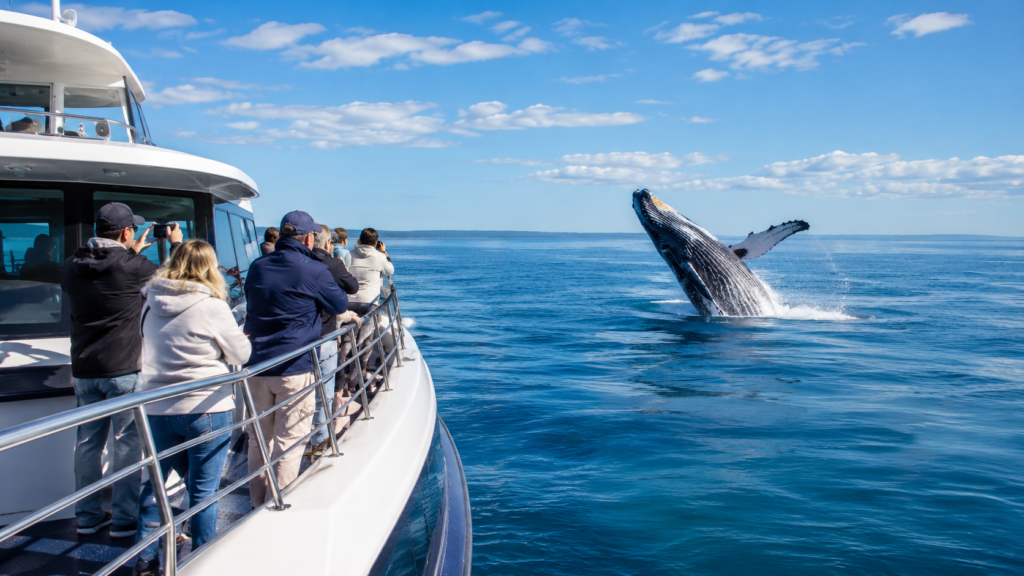
For a first whale watching trip in Australia, Hervey Bay is one of the places we would seriously consider because it has such a strong reputation and the whole destination feels connected to whale season.
Whale watching in Western Australia
Western Australia has one of the longest and most varied whale watching seasons in the country. Humpback, southern right and blue whales migrate along the WA coastline between May and December, travelling from the south west toward the Kimberley.
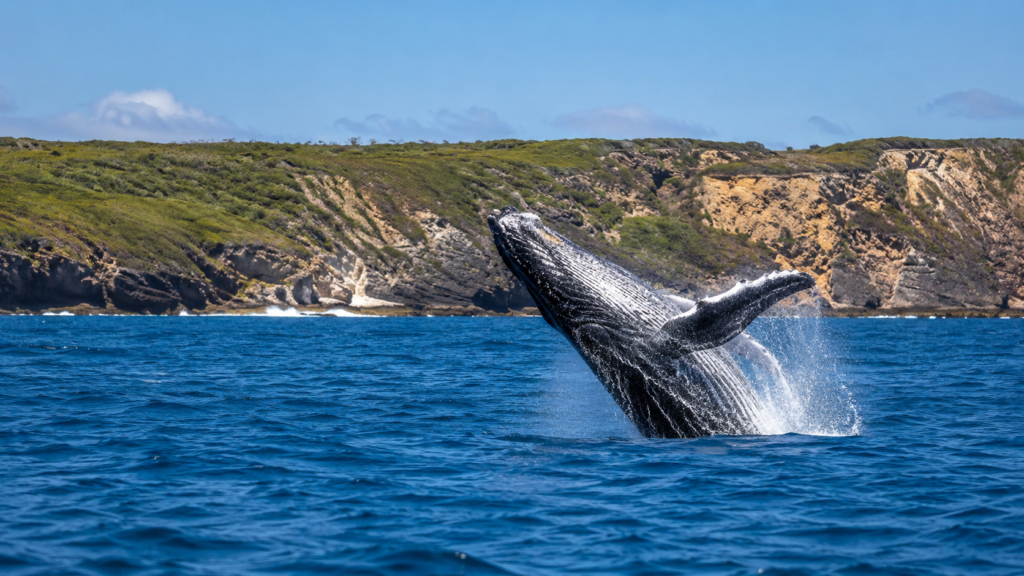
Tourism Australia notes that whales can be seen from Augusta between May and August, and from Dunsborough between August and November. It also mentions Bremer Bay as a place to see killer whales from December to April.
WA is great because it offers different whale watching experiences depending on where you go. Around Perth, blue whales can be seen from March to May near Perth Canyon, while humpbacks can be seen off Perth and around Rottnest Island from September to November.
Whale watching in South Australia, Victoria and Tasmania
The southern coastline has its own whale watching magic, especially for southern right whales.
In South Australia, southern right whales and humpbacks are commonly sighted from May to October, with locations like the Head of Bight being especially well known.
In Victoria, Warrnambool’s Logans Beach is one of the best known places to look for southern right whales. Female southern right whales return there almost every year between June and September to calve.
Tasmania also has a long season. Marine and Safety Tasmania says humpback and southern right whales are regularly sighted off the Tasmanian coast between May and December.
Boat tour or lookout?
Both can be amazing, but they feel very different.
A boat tour gives you a better chance of getting closer to the action, especially if the operator knows where whales have been seen that day. It is also helpful if you want commentary and a more guided experience.
A lookout is slower and more relaxed. You might wait for a while, scan the horizon, and then suddenly see a blow or a splash. There is something beautiful about that. It feels less like a scheduled activity and more like nature deciding to surprise you.
For us, the perfect whale watching day would include both. Start with a coastal lookout in the morning, then take a boat tour if the weather is calm and conditions are good.
What to bring whale watching
Bring a light jacket, even if the day looks sunny. It can feel much colder near the water, especially on a boat. Queensland’s official tourism guide for Hervey Bay recommends a waterproof jacket or windbreaker, long pants and grippy shoes for whale watching.

A camera is definitely useful, but we have learned that whale watching is not always about getting the perfect shot. Sometimes the best moment happens when the camera is down and you are simply watching the water.
Binoculars are also helpful from land based lookouts, especially when whales are further offshore.
Respecting the whales
Whale watching is exciting, but it is also important to give these animals space. In NSW, vessels must not move closer than 100 metres to a whale, and must stay 300 metres away if a calf is present. Drones must also stay at least 100 metres away.
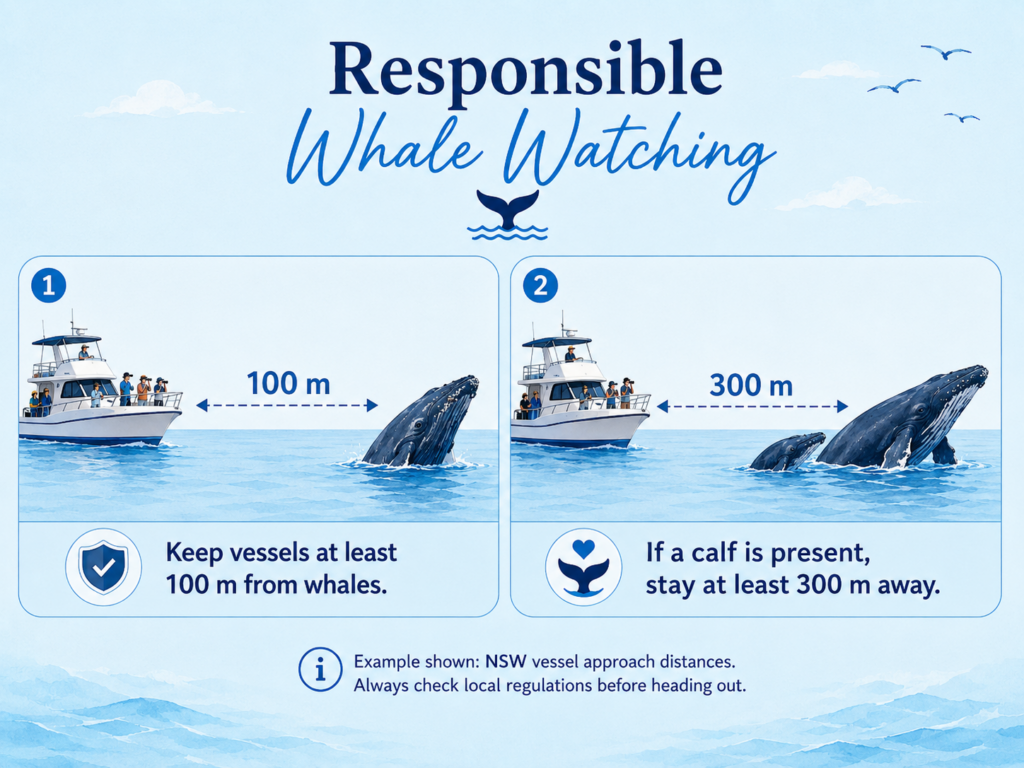
The best whale watching experiences are the ones where the whales behave naturally. No chasing, no crowding and no trying to force an encounter. When a whale chooses to surface, breach or swim nearby, that is what makes the moment special.
Final thoughts
Whale watching in Australia is one of those experiences that feels different every time. Some days you might see only a distant splash. Other days, you might witness a breach that everyone around you remembers for years.
That is part of the beauty of it. You cannot control it. You just show up, look out at the ocean, and wait.
If you are planning your first whale watching trip in Australia, aim for June to October as a strong overall window. For Sydney and NSW, June to November is a great season. For Hervey Bay, plan around the winter and spring months. For Western Australia, check the exact region because the season stretches across different months and species.
And wherever you go, take your time. Sometimes the most unforgettable travel moments are the ones that appear suddenly on the horizon.