How to Plan Your First Japan Trip
Japan is one of those countries that feels exciting even before you arrive.
But when you start planning your first Japan trip, it can also feel overwhelming. Which cities should you visit first? How many days do you really need? Is the JR Pass worth it? And how do you plan your route without making the whole trip feel rushed?
In this guide, we are sharing the tips and tricks we wish we knew before our first Japan trip. We will cover where to go, how many days you need, how to travel around Japan, whether you really need a JR Pass, and a simple 10-day Japan itinerary for first-time visitors.
Understanding Japan by Region
Before planning your Japan itinerary, it helps to understand the country by regions.
Japan is made up of many beautiful areas, and each region offers a very different experience.
Hokkaido is perfect for snow, ski resorts, flower fields, Sapporo, Furano, Biei and Niseko.
Tohoku is quieter and known for nature, mountains, hot springs, Aomori, Sendai and Yamadera.
Kanto is where Tokyo is located, along with Yokohama, Kamakura, Nikko and easy access to Mount Fuji areas.
Chubu is central Japan, known for Mount Fuji, Hakone, Takayama, Shirakawa-go, Kanazawa, Nagano and the Japanese Alps.
Kansai is one of the best regions for first-time visitors, with Kyoto, Osaka, Nara, Kobe and Himeji.
Chugoku is where you will find Hiroshima, Miyajima and the famous floating torii gate.
Shikoku is quieter and more rural, known for temples, scenic drives, Matsuyama, Kochi and Iya Valley.
Kyushu is famous for hot springs, volcanoes, food, Fukuoka, Nagasaki, Beppu, Yufuin, Kumamoto and Kagoshima.
Okinawa feels very different from mainland Japan, with beaches, islands and a slower tropical vibe.
For most first-time travellers, the easiest route is usually Tokyo, Mount Fuji or Hakone, Kyoto, Nara and Osaka. This gives you a beautiful mix of cities, temples, food, culture and nature.
How Many Days Do You Need in Japan?
For your first Japan trip, we recommend spending at least 7 to 14 days.
If you only have 7 days, keep the route simple and focus on Tokyo, Kyoto and Osaka.
With 10 days, you can add Mount Fuji and enjoy the trip at a better pace.
With 14 days, you can include places like Mount Fuji, Nara, Takayama and Shirakawa-go, while still having enough time for food, shopping and slower travel moments.
Japan is very easy to travel around, but there is so much to see that it is also very easy to overplan. Instead of trying to cover everything in one trip, choose a realistic route and leave enough breathing space to actually enjoy the journey.
Best Time to Visit Japan
Japan is beautiful throughout the year, but the best time to visit really depends on what you want to experience and your budget.
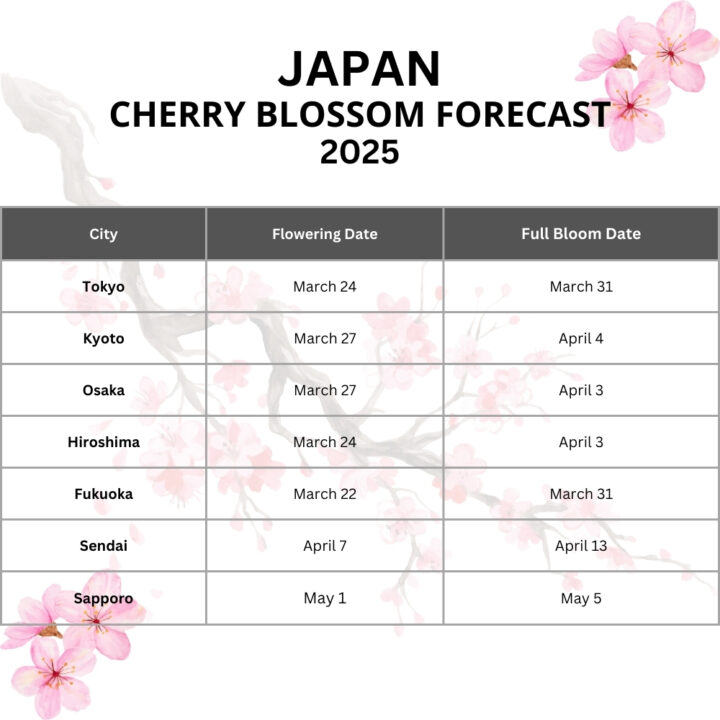
We visited Japan during cherry blossom season, and it was honestly one of the most beautiful times to be there. Spring is famous for sakura, usually around late March and early April in many major cities. However, it is also one of the busiest and most expensive times, so it is better to book hotels early.
Autumn is another amazing season, with colourful leaves, cooler weather and beautiful temple gardens. Popular places like Kyoto can still get crowded, but the scenery is stunning.
Summer can be hot, humid and rainy, especially during the rainy season. You may also need to watch out for typhoons later in summer. However, summer is great for festivals, fireworks, Hokkaido and mountain areas.
Winter is perfect for snow, onsens, skiing, winter illuminations and places like Shirakawa-go, Nagano and Sapporo.
So choose the season based on what you want most — cherry blossoms, autumn colours, snow, festivals or a more budget-friendly trip.
How to Travel Around Japan
Japan has one of the best public transport systems in the world.
You can travel around easily using trains, subways, buses, airport trains and bullet trains.
For long-distance travel, the Shinkansen, or bullet train, is fast, comfortable and very reliable.
For local travel inside cities, IC cards like Suica, Pasmo and Icoca are extremely useful. You can use them to tap in and out of trains, subways and buses without buying paper tickets every time.
They also work like a small wallet at convenience stores, vending machines, lockers and some shops.
If your phone supports it, you can add an IC card to your mobile wallet and simply tap your phone at train gates and shops.
Google Maps is also very helpful for train times, platforms, walking routes and station exits.
Do You Really Need a JR Pass?
A lot of people think they must buy a JR Pass before visiting Japan, but that is not always true.
The JR Pass can be useful if you are doing several long-distance train journeys within a short period. However, it is not always the best option for every itinerary.
For a simple route like Tokyo, Kyoto and Osaka, buying individual Shinkansen tickets and using an IC card for local travel can often be easier and better value.
The best thing to do is plan your route first, then compare the total cost of your train tickets with the JR Pass price.
For example, on our first Japan trip, we only used the Shinkansen twice: Kyoto to Tokyo and Toyama to Tokyo.
So for our route, we did not need to buy the expensive JR Pass for the whole trip.
The best tip is this: do not buy the JR Pass just because everyone talks about it. Check your actual itinerary first, and only buy it if it truly saves you money.
Where to Stay in Japan
Japan has many types of accommodation, from modern hotels and business hotels to ryokans, hostels, apartments and traditional inns.
For first-time travellers, location is one of the most important things to think about.
Try to stay close to a major train station because it makes airport transfers, day trips, luggage movement and early morning starts much easier.
If you want a more traditional experience, you can also stay in a ryokan, especially in places like Hakone, Takayama, Gero Onsen or other onsen towns.
Our biggest tip is to choose accommodation based on convenience, not just price. Staying in the right area can save you a lot of time and energy during the trip.
Food in Japan
Food is one of the best parts of travelling in Japan.
You do not always need expensive restaurants to enjoy good food. Some of the best meals can be found in small local restaurants, food markets, train stations and even convenience stores.
Convenience stores in Japan are on another level. Places like 7-Eleven, Lawson and FamilyMart are great for quick meals, snacks, coffee, desserts, breakfast and late-night food.
They are also very useful on busy travel days when you do not have time to sit down at a restaurant.
If you are vegetarian or vegan, Japan is possible, but it does need some planning. Many dishes that look vegetarian may still contain fish-based stock, especially dashi, which is commonly used in soups, sauces and broths.
It is a good idea to research restaurants in advance, save a few options near your hotel, and use Google Translate to check menus and ingredients.
Cash, Cards, SIM Cards and Internet
Japan is more card-friendly now, especially in big cities, hotels, convenience stores and larger restaurants.
However, it is still a good idea to carry some cash because you may need it for small restaurants, markets, local buses, coin lockers and rural areas.
For internet, you can use an eSIM, physical SIM card or pocket Wi-Fi.
You can buy SIM cards or rent pocket Wi-Fi at the airport, or book them online before your trip and collect them when you arrive.
For short trips, an eSIM is one of the easiest options because you can set it up before you land and get connected straight away.
Mobile data is very important in Japan because you will use it for maps, train platforms, translation apps, bookings and restaurant searches.
Before your trip, make sure your cash, card and internet setup is ready. It makes your first day much smoother.
Apps to Download Before Visiting Japan
Before travelling to Japan, it is worth setting up a few apps because they can make your trip much easier.
Google Maps is one of the most useful apps for train routes, walking directions, platforms, station exits and travel times.
Google Translate is very helpful for menus, signs, ingredients and simple conversations. The camera translation feature is especially useful when reading Japanese menus or labels.
Japan Travel by NAVITIME is useful for checking train routes, public transport options and planning longer travel days.
If you are planning to book bullet trains, SmartEX can be helpful for some Shinkansen routes, especially between major cities like Tokyo, Kyoto and Osaka.
Also keep your airline app, hotel booking app, eSIM app and currency converter ready before you arrive.
Having these apps set up early will save you time, stress and confusion during your Japan trip.
Respecting Local Culture in Japan
Japan is very welcoming, but it is important to respect local culture and public spaces.
On trains and buses, keep your voice low and avoid talking loudly on the phone.
At stations, temples and attractions, follow signs, stand neatly in queues and be mindful of people around you.
At temples and shrines, stay calm, follow photography rules and avoid blocking anyone who is praying.
Take off your shoes when required, especially in traditional stays, some restaurants and temple areas.
Also remember that rubbish bins can be hard to find, so carry a small bag and dispose of your rubbish properly later.
Avoid eating while walking, and avoid eating on local trains. If you are travelling on long-distance trains like the Shinkansen, eating a bento is usually okay.
Small things like this make a big difference and help you travel more respectfully in Japan.
Practical Japan Travel Tips
Be prepared to walk a lot in Japan.
Even though the train system is excellent, you will still walk through large stations, underground passages, shopping streets, temple areas and neighbourhoods.
Wear comfortable shoes and keep your daily plan realistic.
Pack lightly if you can, because carrying large suitcases through stations, stairs, buses and crowded streets can get tiring quickly.
If you are travelling between cities, luggage forwarding is a very useful option. You can send your suitcase from one hotel to another and travel with just a small day bag.
This makes train travel much easier, especially if you are visiting multiple cities or stopping somewhere before hotel check-in.
Coin Lockers and Luggage Storage in Japan
Coin lockers are very useful in Japan, especially if you arrive before hotel check-in or have a late train.
You can find them in many train stations, bus terminals, shopping centres and tourist areas.
As a rough guide, small lockers usually cost around ¥400 to ¥500 per day, medium lockers around ¥500 to ¥600, and large lockers around ¥700 to ¥800.
Some lockers take coins, while many modern lockers accept IC cards like Suica, Pasmo or Icoca.
For city-to-city travel, luggage forwarding is usually better. Services like Yamato can send your suitcase from one hotel to another, and a large suitcase can cost around ¥3,000 to ¥5,000 per bag, depending on size and distance.
So for a few hours, use coin lockers. For travelling between cities, luggage forwarding can make your trip much easier.
Final Tips Before You Go
Before your trip, check visa requirements based on your passport.
Book popular attractions early, especially places like teamLab, Shibuya Sky, Ghibli Museum, Universal Studios Japan, Disney and special experiences.
Check your airport arrival plan before you fly. Know how you will get from the airport to your hotel.
Carry some cash, keep your apps ready and save your hotel address in both English and Japanese if possible.
Also check the weather before packing because Japan can feel very different depending on the season and region.
Sample 10-Day Japan Itinerary for First-Time Visitors
If you are visiting Japan for the first time and have 10 days, here is a simple and practical route.
Days 1 to 3: Tokyo
Spend your first three days in Tokyo exploring places like Shibuya, Shinjuku, Asakusa, Harajuku, Ueno, food streets, shopping areas and neighbourhoods with different vibes.
Tokyo is a great place to start because it gives you a mix of modern Japan, traditional temples, food, shopping and city life.
Days 4 to 5: Mount Fuji or Kawaguchiko
Then spend two days around Mount Fuji, especially in places like Kawaguchiko.
This gives you time to slow down and enjoy the views instead of rushing it as a day trip.
Staying near Mount Fuji also gives you a better chance of seeing the mountain early in the morning, when the weather is usually clearer.
Days 6 to 7: Kyoto
After Mount Fuji, travel towards Kyoto and spend two days exploring Fushimi Inari, Arashiyama, Kiyomizu-dera, Gion and the beautiful temple streets.
Kyoto is one of the best places to experience traditional Japan, especially if you enjoy temples, old streets and peaceful gardens.
Day 8: Nara
Spend one day in Nara, where you can visit the famous deer park, temples and peaceful walking areas.
Nara is easy to visit from Kyoto or Osaka and is a great addition to a first Japan itinerary.
Days 9 to 10: Osaka
Finally, spend your last two days in Osaka for Dotonbori, Osaka Castle, street food, shopping and your flight connection.
Osaka is a fun city to end your trip, especially if you love food and lively streets.
This 10-day route gives you a great first taste of Japan with a mix of big cities, Mount Fuji views, temples, culture, food and enough breathing space between places.
Final Thoughts
Japan is one of those countries where one trip never feels enough.
There will always be another city to explore, another local dish to try, another quiet street to walk through and another reason to come back.
But for your first trip, the most important thing is to plan smartly. Choose a route that makes sense, use the right transport, pack light, respect the culture and give yourself enough time to actually enjoy each place.
We hope this guide helps you plan your Japan trip with more confidence and less stress.
If you are planning Japan soon, let us know which city or region you are most excited to visit.